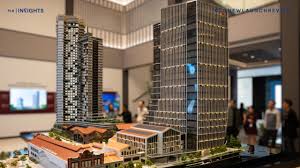
Living Beyond the Core: How Decentralisation Is Quietly Rewriting Singapore’s Housing Story

For decades, Singapore’s residential desirability was closely tied to proximity to the city centre. Shorter commutes, central amenities, and established prestige shaped buyer preferences across market cycles. Today, that equation is being steadily rewritten. Urban decentralisation—once discussed mainly in planning documents—is now influencing how residents choose where to live, work, and invest.
This shift is not driven by a rejection of city living, but by a more nuanced understanding of convenience, balance, and long-term sustainability. As regional hubs mature and daily life becomes less centralised, residential value is increasingly defined by functionality rather than postcode alone.
The Rise of Self-Sufficient Districts
Singapore’s decentralisation strategy has focused on developing regional centres that combine employment, retail, recreation, and residential components. Areas such as Jurong Lake District, Paya Lebar, and emerging mixed-use zones are designed to reduce reliance on the traditional city core.
For residents, this translates into shorter intra-district travel, easier access to amenities, and a more predictable daily routine. Living near a regional hub allows households to meet most of their needs within a smaller geographic radius—an appealing proposition in a dense urban environment.
Residential developments like Hudson Place Residences, located within well-connected urban districts, reflect this broader move toward neighbourhoods that function as complete ecosystems rather than dormitory spaces.
Redefining Convenience in an Urban Context
Convenience is no longer measured solely by distance to the Central Business District. Instead, residents are evaluating how efficiently a location supports daily life. Access to transport nodes, grocery options, healthcare facilities, and green spaces often outweigh marginal differences in commute time.
This recalibration has influenced demand patterns across Singapore. Areas once considered secondary are now viewed more favourably due to improved infrastructure and planning coherence. In many cases, decentralised locations offer a calmer living environment without sacrificing accessibility.
Developments such as Dunearn House, situated within established residential corridors, benefit from this shift by offering connectivity and neighbourhood depth without the intensity associated with central districts.
Transport Networks as Enablers, Not Anchors
Singapore’s transport system plays a critical role in making decentralised living viable. Rather than anchoring residential demand to a single employment zone, MRT lines and expressways now enable flexible movement across multiple nodes.
As work patterns diversify, residents may commute to different parts of the island throughout the week. Locations that sit at the intersection of multiple transport options allow for this flexibility, supporting both professional mobility and personal convenience.
Importantly, this has reduced the premium traditionally placed on centrality, allowing residential value to be distributed more evenly across the island.
Lifestyle Spillover from Regional Hubs
As regional centres grow, their influence extends into surrounding residential neighbourhoods. New dining options, cultural venues, and recreational facilities often emerge in response to increased foot traffic and local demand.
This spillover effect enhances the liveability of nearby housing areas, making them more attractive to a wider range of residents. Young professionals, families, and older households alike benefit from having amenities within easy reach, without the congestion associated with city-centre living.
Over time, these neighbourhoods develop distinct identities shaped by local activity rather than city-wide trends.
Implications for Residential Longevity
Decentralisation has meaningful implications for long-term residential relevance. Homes located near growing regional hubs are better positioned to remain aligned with infrastructure investment and urban planning priorities.
From a homeowner’s perspective, this alignment supports sustained usability. From an investment standpoint, it can contribute to more stable demand, as properties benefit from both local and island-wide accessibility.
Rather than relying on short-term desirability, decentralised locations often demonstrate gradual, organic strengthening as surrounding amenities and employment options expand.
Community Formation Outside the City Core
One of the less discussed outcomes of decentralisation is its impact on community dynamics. Residential neighbourhoods outside the core often foster stronger local engagement, as residents spend more time within their immediate surroundings.
Shorter travel distances encourage participation in local activities, frequent use of neighbourhood amenities, and informal social interaction. Over time, this contributes to a sense of belonging that is harder to cultivate in highly transient, central districts.
Such community stability adds an intangible layer of value to residential areas—one that is not captured by price metrics alone but strongly influences satisfaction and retention.
A Measured Transition, Not a Departure
It is important to note that decentralisation does not signal a decline in city-centre relevance. Instead, it represents a diversification of viable residential choices. Central areas will continue to attract demand, but they are no longer the default benchmark for desirability.
As Singapore’s urban form becomes more polycentric, residents gain the flexibility to choose homes based on lifestyle alignment rather than necessity. This choice is increasingly shaping market behaviour, particularly among households prioritising balance and long-term adaptability.
Conclusion: Value in a Distributed City
Singapore’s decentralisation journey is unfolding gradually, but its effects on residential preferences are already evident. As regional hubs mature and transport connectivity strengthens, the definition of a “good location” continues to expand.
Developments such as Hudson Place Residences and Dunearn House illustrate how residential value can be supported outside the traditional city core—through integration with transport networks, neighbourhood amenities, and evolving urban ecosystems.
In a distributed city, relevance is no longer concentrated in a single centre. Instead, it emerges from how well a home fits into the rhythms of everyday life. As decentralisation progresses, residential success in Singapore will increasingly be measured not by proximity alone, but by how effectively a location supports modern urban living over time.